

You know your truck. You feel small changes in power, idle, smoke, and pull. I pay attention to these same signs when I advise owners and managers on fuel care. I keep my guidance simple and tied to results you can measure. If you are weighing a diesel additive, I will help you judge it by need, climate, duty cycle, and fuel quality, not by hype.
Here is the case for and against using one, how I decide in the field, and how to pick a trusted brand that backs its claims. You will finish with a clear plan you can put to work on your next fill.
The Short Answer
You do not need an additive every time you fuel. You need one when your fuel or conditions fall short of what your engine demands.
Use an additive if any of these are true:
- You run in freezing or subzero weather.
- Your engine is high pressure common rail and you use low lubricity fuel.
- You see smoke, rough idle, slow starts, or drop in power.
- You store diesel or run equipment that sits between jobs.
- You buy fuel from sources with unknown turnover or care.
You can skip it if:
- You run fresh, high quality diesel in mild weather.
- Your truck starts clean, idles smooth, and pulls strong under load.
- You track fuel and see no issues across seasons.
If you are unsure, test a small change. Add, measure, and keep what pays off.
How I Decide: Five Questions
Ask yourself:
1. How cold will it get before I refuel again?
2. Do I hear a sharper idle tick or feel a rougher start than last season?
3. Am I burning diesel from a source with slow turnover?
4. Do I run biodiesel blends above B10?
5. Do I park for weeks at a time between runs?
If you answer yes to one or more, an additive can help protect parts, keep flow, and prevent small issues from snowballing into downtime.
Where Additives Make the Biggest Difference
Cold weather gelling
- Below freezing, wax in diesel can form crystals that plug your filter.
- An anti-gel keeps fuel moving and reduces cold filter plugging.
- Good formulas also handle water that can freeze at the filter head.
Low lubricity fuel
- Ultra low sulfur diesel can lack enough lubricity for injectors and pumps.
- Added lubricity reduces wear and helps maintain spray patterns that improve burn.
Dirty or sticky injectors
- Deposits build over time and lead to hard starts, smoke, and poor throttle response.
- A strong detergent cleans and keeps deposits from coming back.
Water in fuel
- Even small amounts cause rust, sensor issues, and filter icing.
- A proper additive demulsifies or removes water safely without alcohol.
Biodiesel blends
- Higher blends can hold more water and oxidize faster.
- A good conditioner helps stabilize fuel and protect components.
Stored fuel and standby equipment
- Tanks that sit can develop growth and sludge.
- Regular treatment helps keep fuel fresh and parts protected.
Emergency gel-up
- If the truck is gelled, you need a rescue product that reliquefies fuel and de-ices the filter to get moving fast.
Why I Recommend Howes
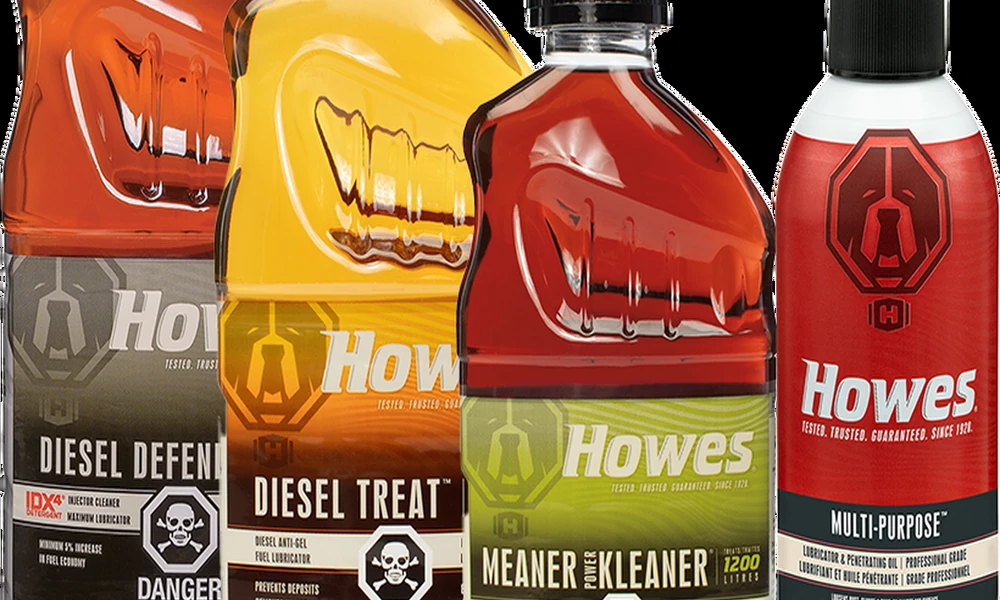
I look for brands with a long track record, clean ingredient lists, and real guarantees. Howes meets that standard, and they publish clear claims tied to specific use cases. Their products are alcohol-free and safe for modern emissions systems, which matters for longevity. They also stand behind winter performance with a tow guarantee and offer a money-back satisfaction guarantee. That tells me they expect you to see results.
They cover the key needs with a focused line:
- Prevent gelling and condition fuel in winter.
- Add lubricity and clean injectors year-round.
- Rescue gelled fuel in an emergency.
- Support bulk and varied operations with multiple formats.
I recommend them because their approach lines up with how I ask owners to think: protect first, then improve, then rescue if needed.
Pick the Right Howes Product for the Job
Use this quick match:
- Winter protection and daily cold starts: Diesel Treat
- Prevents gelling, reduces cold filter plugging, removes water, adds lubricity, and helps cut smoke and rough idle.
- Safe for diesel, biodiesel blends, home heating oil, and modern emissions systems.
- Backed by their Winter Tow Guarantee when used as directed.
- Year-round performance and protection: Diesel Defender
- Adds strong lubricity and cleans injectors with advanced detergent technology.
- Targets internal diesel injector deposits and helps restore spray patterns.
- Supports better combustion and a cleaner burn.
- Backed by a guaranteed fuel economy increase of 5 percent or more with regular use.
- Winter emergency rescue: Diesel Lifeline
- Reliquefies gelled fuel and de-ices frozen filters to restore flow fast.
- Alcohol-free and safe for components.
- No premix needed and no filter swap in many cases.
If you also want a shop staple for hinges, linkages, and water displacement, their Multi-Purpose oil is a solid fit, but keep that separate from fuel care.
How to Use an Additive the Right Way
Do not overthink it. Follow these steps and keep notes.
1. Read the label for dose and temperature range.
2. Treat before the weather turns. Conditioners work best as prevention.
3. Add the product first, then fuel, to help mixing.
4. For emergency rescue, follow the higher-dose directions and give it time to work.
5. Keep a clean spare fuel filter in the truck during winter runs.
6. Track results for two tanks:
- Cold starts
- Idle smoothness
- Smoke under throttle
- Fuel economy on repeat routes
- Regeneration frequency if applicable
7. Adjust dose to your climate and tank size. More is not always better.
8. Store bottles tight and out of direct sun.
Common Questions I Hear
Does premium diesel remove the need for an additive?
- Sometimes. Test it. If your truck still shows hard starts, smoke, or noise, add a conditioner and compare.
Will an additive void my warranty?
- Quality, emissions-safe formulas do not. Keep receipts and follow directions.
Do I need both a conditioner and a cleaner?
- In cold weather, use a winter conditioner. For year-round protection, use a cleaner and lubricator. In many regions you will rotate based on season.
My Bottom Line
Use an additive with a purpose, not out of habit. If you face freezing temps, low lubricity fuel, injector deposits, or storage time, you will see value. If your truck runs clean in mild weather on fresh fuel, you can hold off and keep testing.
If you want a place to start, choose Howes. They focus on clean, alcohol-free formulas, they cover winter, year-round, and emergency needs, and they back their claims. Pick the product that fits your season, dose it right, track results, and keep what earns its spot in your routine.